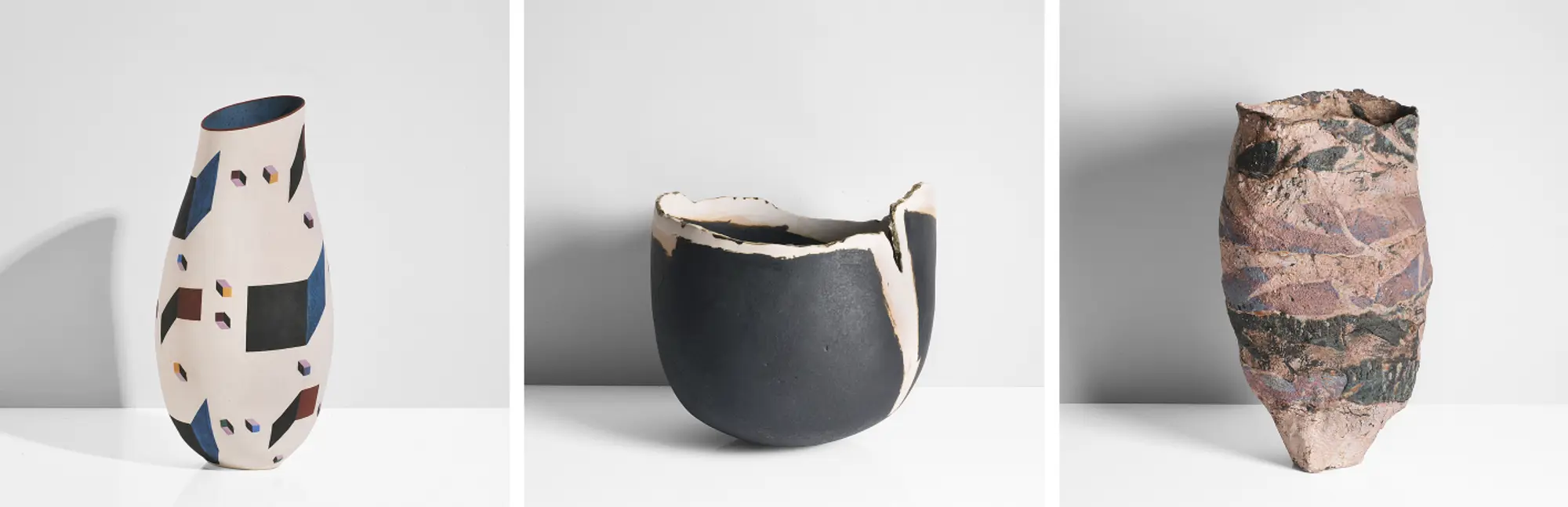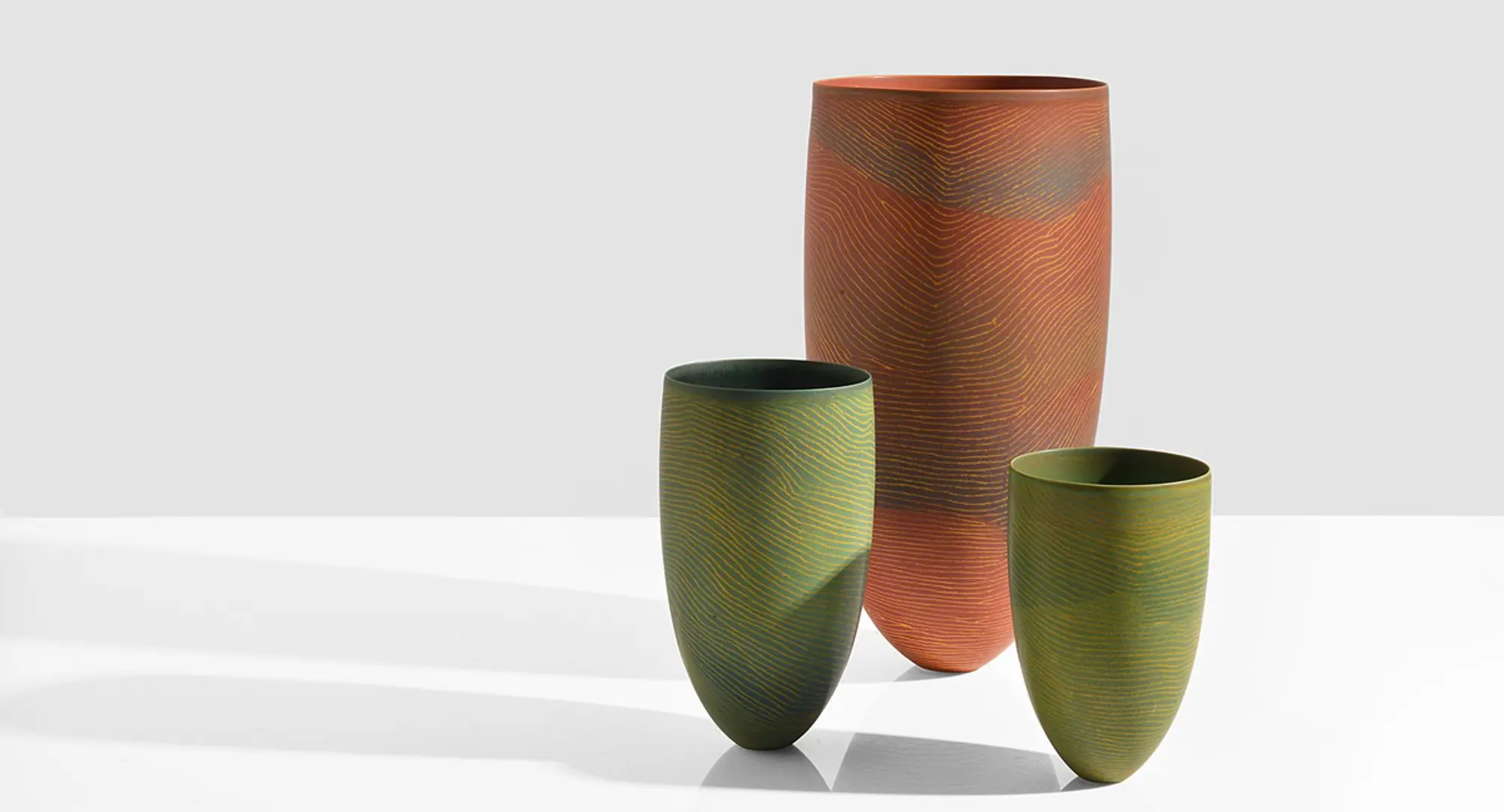
This November, Maak presents two auctions in Covent Garden, London. Living Collections | Contemporary Ceramics, its twice-yearly auction of contemporary studio ceramics, is followed by Elemental | Contemporary Japanese Ceramics, the annual sale dedicated to modern and contemporary ceramic art from Japan. Together, the auctions celebrate the breadth of studio ceramics, while Living Collections offers an opportunity to explore the personal histories of the works and those who have collected and lived with them.
The ceramics brought together in Living Collections reflect many different approaches to collecting. Some have been assembled over decades through considered selection and close relationships with artists; others have been commissioned for a particular purpose, passed through generations or preserved through chance discoveries. Each carries a history beyond the studio, shaped by the people, places and experiences with which it has become associated. Collections are rarely static. They grow and evolve as tastes develop, interests deepen and familiar works continue to reveal new qualities over time.
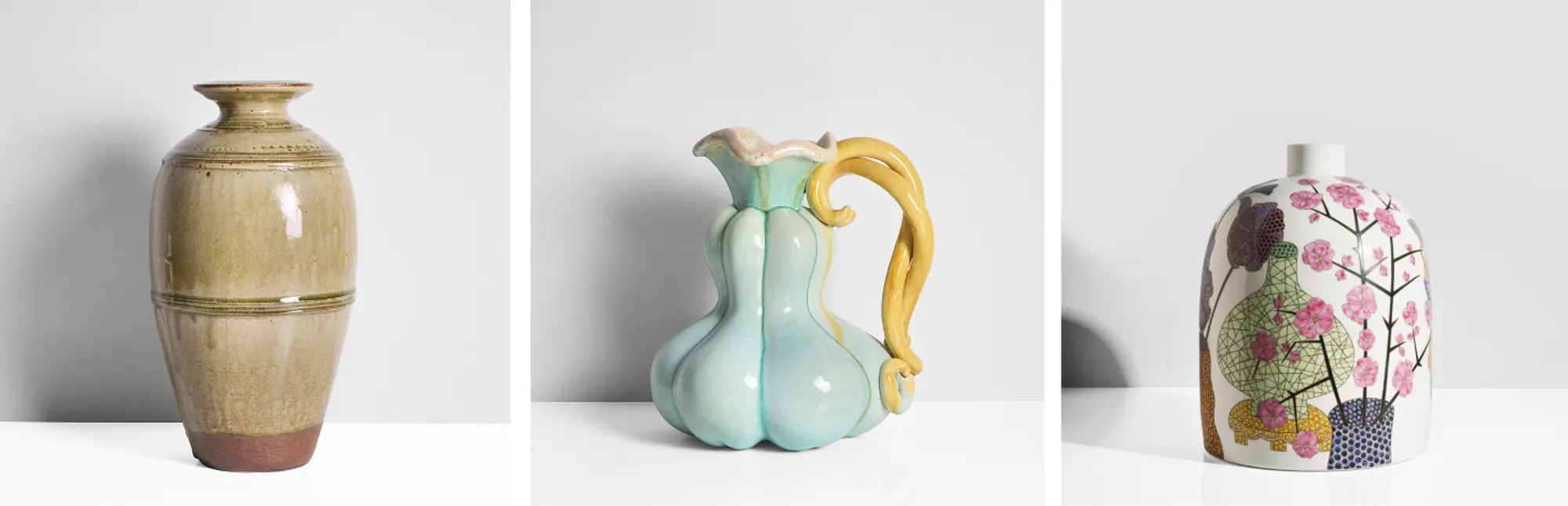
Among the collections represented in the auction is that of Keith Seeley, shaped over more than three decades by his instinctive response to ceramics and the pleasure of living with them. He describes his relationship with the collection as "a circular experience of rediscovering the beauty in all the pots". His encounters with makers, including Richard Batterham (lots 58 & 59), Kate Malone (lots 218 & 219) and Felicity Aylieff (lots 215 & 216), have become part of this personal history, with works acquired directly from the artist carrying memories of those relationships. The process of deciding which pieces to part with has prompted fresh appreciation for works that have long been part of his daily life.
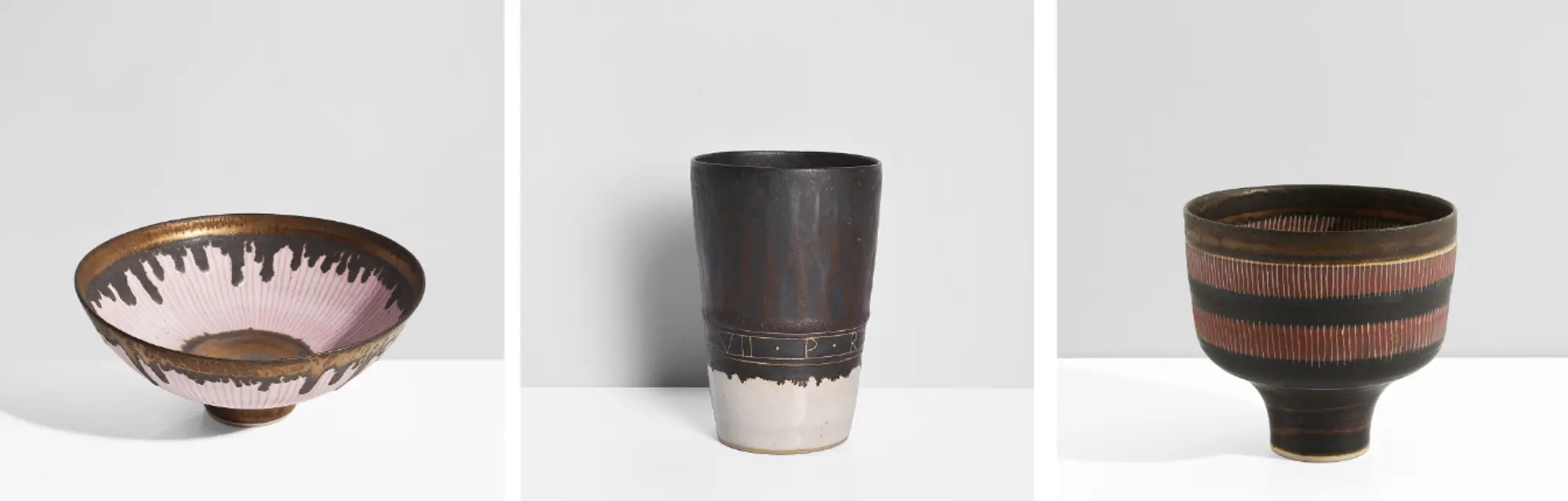
Relationships between artists and collectors can also find expression in works commissioned for a particular occasion or purpose. A particularly personal example is a marriage beaker made by Lucie Rie in 1957 (lot 75). Commissioned by Roger and Patricia Rigby, it formed part of a series of inscribed and dated beakers presented to members of the friends' choir who sang at their wedding. Patricia, herself a potter, and Roger went on to become among the earliest and most dedicated collectors of Lucie Rie and Hans Coper. The beaker came from the private collection of Lord and Lady Chorley, themselves early collectors of both artists. Created to commemorate a shared celebration, this small object offers a glimpse of the close personal connections that developed around Rie and Coper during this formative period of British studio ceramics.
A commission of a very different character is the menorah by Claudi Casanovas (lot 206), commissioned directly from the artist by its present owner. Its rugged inclusions, dark striations and richly textured surface bring Casanovas's distinctive sculptural language to a traditional ceremonial form.
Collecting can also be shaped by the shared experience of discovering an artist's work. The thirteen pots by John Ward in Living Collections (lots 148-159) come from several private collections. Two collectors share fond memories of acquiring Ward's pots from the Peter Dingley Gallery, where exhibition openings throughout the 1980s, until the gallery's closure in 1991, attracted such enthusiasm that entry had to be ticketed to give visitors a fair opportunity to buy. Both developed their own strategies to improve their chances of securing the works they most wanted, experiences they recall vividly decades later.
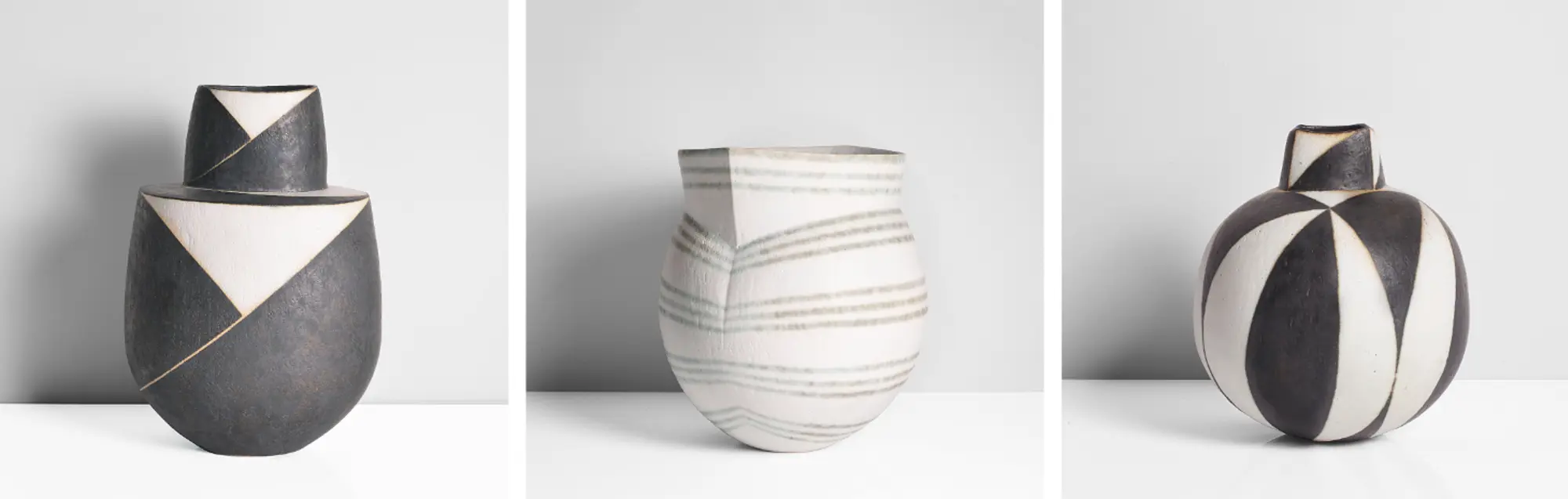
One such hard-won acquisition is the black and white Rounded Pot with Squared Neck, from circa 1990 (lot 158). Other examples include a black and white oval Shouldered Pot, circa 2004 (lot 157), and a large white and green banded Collared Pot (lot 159). Seen together, the group offers an opportunity to explore Ward's distinctive treatment of form, proportion and surface, and the subtle variations within an artistic language developed over many years
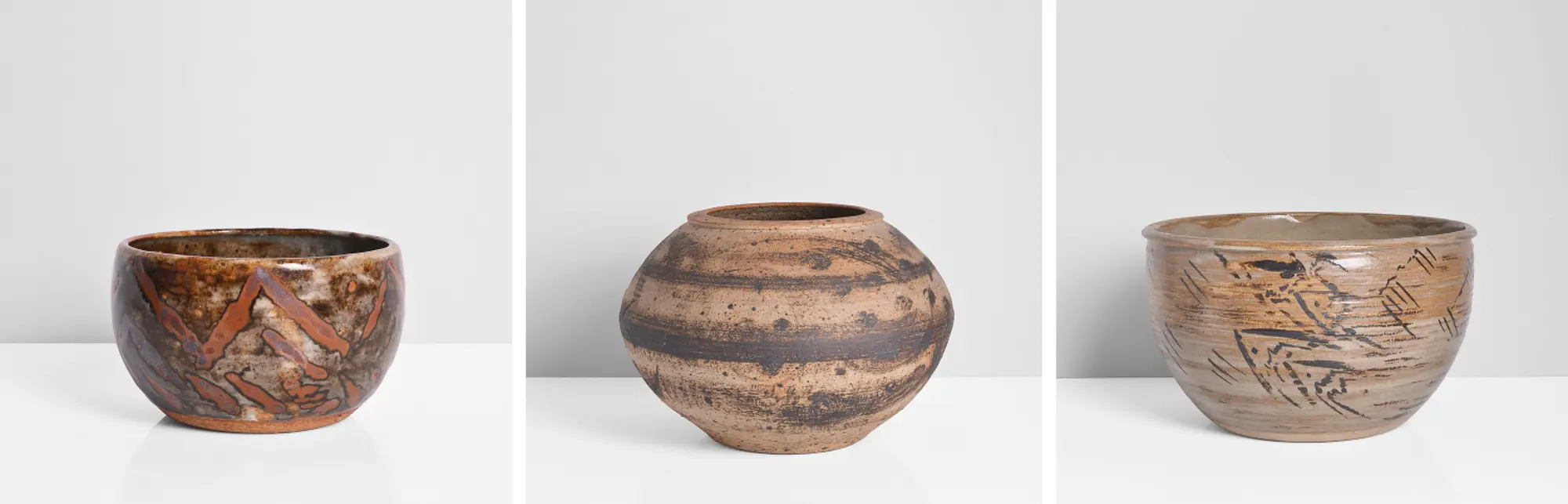
Yet not every collection begins with a conscious decision to collect. Sometimes the role of custodian arrives unexpectedly. In June 1975, the purchasers of Old Quarry Cottage on the historic Duckyls Estate in West Sussex discovered a group of pots by Norah Braden, left behind in old boxes by the property's former tenant. Braden had lived at the cottage for some years before the estate was sold. Delighted by their discovery, the new owners kept the pots at the cottage, where they remained for more than half a century (lots 44, 45 and 46). Their survival is a reminder that objects are not always deliberately preserved. Sometimes they survive simply because someone recognises something worth keeping.
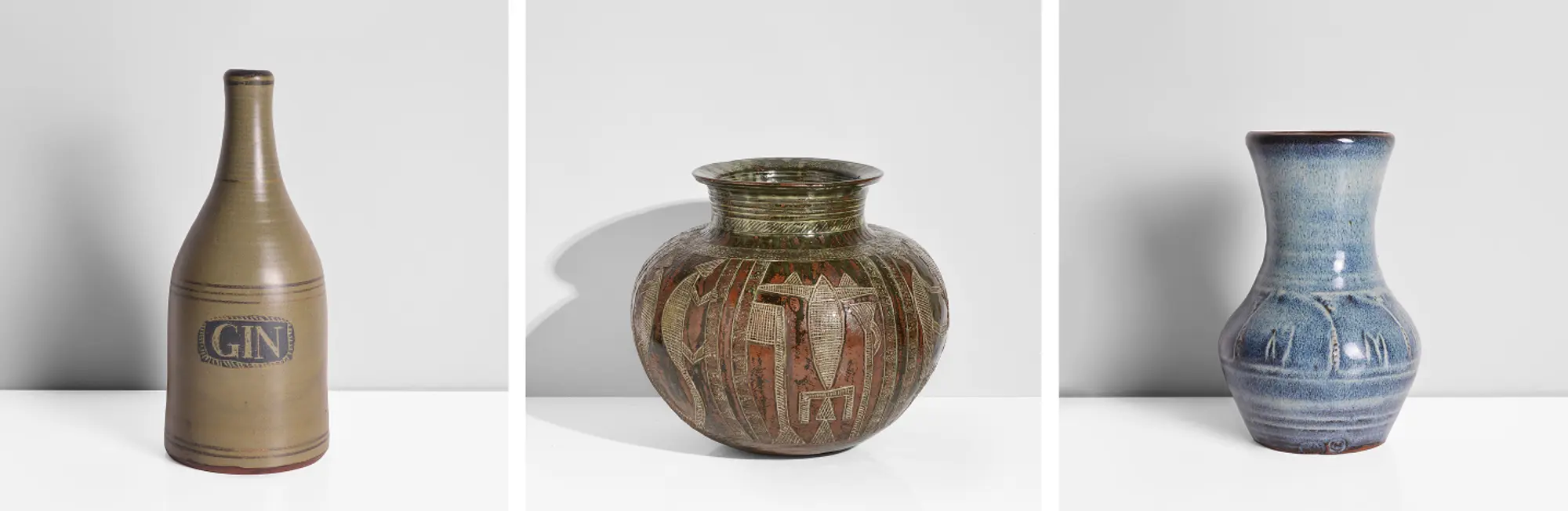
While some ceramics survive through chance, others have documented histories that reveal how they have been encountered and understood over time. A Water Pot by the Nigerian potter Ladi Kwali, from the Keith Seeley Collection (lot 35), offers a particularly intriguing example. Among its decorative motifs is the unexpected image of an aeroplane. Writing about another water pot by Kwali featuring a similar motif, Simon Olding has suggested that the aeroplane may refer to her journey to Europe and the significance of that experience in developing her international reputation. Originally acquired directly from the artist in Abuja, the work was exhibited at Berkeley Galleries in London and in Grès Nigériens at Galerie La Borne in Paris, both in 1962. More than fifty years later, it was included in the exhibition Ladi Kwali at the Crafts Study Centre in Farnham in 2015. Its unusual decoration and exhibition history offer a fascinating perspective on the international recognition of Kwali's work
Abuja also features in the history of three works by Michael Cardew (lots 30–32), from the collection of the late Michael Ensor. The two men first met in 1946, when Ensor was working as an Assistant District Officer in Ada, in present-day Ghana, and Cardew was based nearby at Vume. A friendship developed, although they lost touch when Ensor left his post the following year. They later reconnected during Cardew's time in Abuja, when he visited Ensor in Lagos. Over the course of their friendship, Cardew gifted a number of works to Ensor, including a lidded bowl now offered in the auction. Passed down through the family, preserving a personal connection between the two men alongside the works themselves.
Exhibition histories also offer valuable insights into different periods of an artist's practice. A group of early works by Lucie Rie, dating from 1943-1947 (lots 71- 74), belong to a brief period when she was influenced by Bernard Leach and English medieval forms, characterised by their unglazed red earthenware bodies and pronounced throwing rings. Several were included in the seminal Lucie Rie retrospective at the Crafts Council Gallery in 1992, and acquired later that year from Galerie Besson by the present owner. Their exhibition history provides a further perspective on this less familiar chapter of Rie's artistic development.
Other works carry quieter histories through the families who have lived with them. A footed bowl with sgraffito by Rie (lot 88), acquired directly from the artist in the late 1970s, has remained within the same family across generations and now appears on the secondary market for the first time.
Beyond these individual histories, Living Collections also celebrates the breadth of ceramic expression. The expressive sculptural forms of Ewen Henderson and Gordon Baldwin sit alongside works by Elizabeth Fritsch, Alison Britton, Jennifer Lee, Kate Malone and Edmund de Waal, each bringing a distinctive approach to form, surface and material. Together, they reflect the diversity of artistic practice represented in the auction, and remind us that collecting often begins with a direct response to the work itself: a particular form, texture or quality that captures the imagination and continues to reward attention.
One of the particular pleasures of an auction is the opportunity to bring together objects that have previously belonged to very different homes and collections. For a brief period, they occupy the same space, offering new possibilities for comparison and revealing unexpected relationships between works, artists and collectors. Seen in a different context, even familiar ceramics can invite fresh appreciation. Living Collections celebrates these many experiences of collecting, recognising that the significance of ceramics extends beyond their making, and that their stories continue as they pass into new hands.